Illumi Presents : The History of Glitter
- AuntieWicked

- Mar 2, 2010
- 10 min read
Where Does Glitter Come From?Where Does Glitter Come From?
by: your friendly neighborhood
Auntie Illumi
“Oh glitra, glitenian, gleissen, ghleid, glitterati”.
Asking Where Glitter comes from is an essential question in the practice of happiness, love, and light! It is in fact THE question!It is as essential as the question, “Why are We here?” and this Auntie has found it almost as difficult to answer!! As with most investigations, even with the brightest LED Wand there is, some things remain in the dark, uncovered, and buried.
So it is with the history of glitter, especially the more modern version of the species! Never fear, I will continue to commune with the divas to uncover more about the truths of glitter and keep everyone abreast of new developments!
But what I know so far is this :GLITTER is older than your great great grand mammy and came from the earth itself. Rocks people. Glitter is as old as ROCKS!
Or minerals as the case may be:
INTRODUCING RED HEMATITE: THE FIRST BODY GLITTER
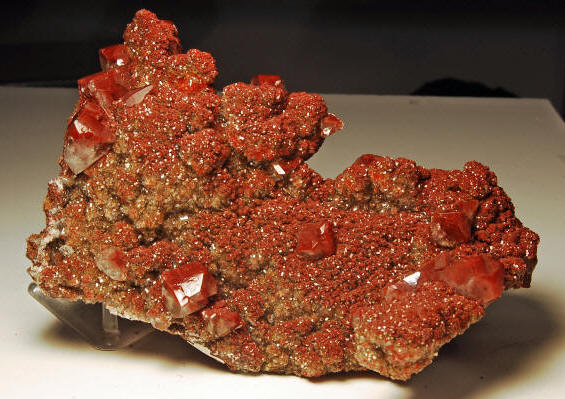
This Mysterious glitter finding is POWDERED HEMATITE. It was found in a a substance that used to be smearable. How long ago was it made? Think upper paleolithic cave people! Professor Zilhao’s page here states pretty firmly in this that the pigments found in shells at Cuava Anton were for ornamental and decorative use. And this Auntie goes so far as to say: here lies your first body glitter! Wow those cave girls were so fashion forward!
While spinning around and around and throwing historical notes in the air, the next one to land on my face, where all glitter things, even glitter notes should be, was the this tidbit from India. From 3000 BC to 1500 BC women went topless with just their glitter jewels to adorn them. Glitter bra much? (katy perry had no idea she was wearing traditional garb!)
found somewhere at the www.dailymail.co.uk/home/index.html
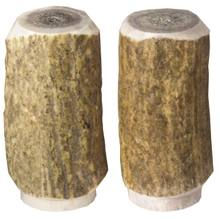
Now if that’s not enough to rock your socks check out Ovid in 43 BC! He give a recipe made of eggs barley, stag horn, and narcissus. For what purpose you ask? “for a face that glitters more brightly than the sun”(Ovid)
Then there is China 420 BC- 589 BC . Cut out awesome shapes and stick them to the forehead. These shapes were usually flowers in reference to and imitation of Princess Shouyang.Shapes like these were called sunglows.
They were shiny and beautiful because they were made of glittering gold foil, shells, isinglass(read what that is here: en.wikipedia.org/wiki/Isinglass – sick I know, and green bird feathers!
Picture of Isinglass for those who didn’t read about it:
Much Later(mid 1700s) Europeans used black silk patches: initially to cover moles or disease scars but then became a trend and even had their own symbolism. The most common shapes were moons, stars, suns, and comets! Cut out decorative shapes for the body definitely belong in our history of glitter!
They kept the patches in these fantastic boxes:
In India there is and has been since maybe 300 b.c, a festival of colors called the Holi festival. Color powders of all sorts were and are made to be smeared on each others faces. Homemade natural powders are encouraged but abeer(one of the color powders) has been made with mica and other small crystals. (holifestival.org)

The next stop is Egypt where green malachite called Udju was used :
– it’s more of a shimmer than a true glitter but it still gets a honorary nod here. As does the fact that Egyptians, Roman, and Greeks all loved to used perfumed oils on their bodies. It’s just a guess but I am thinking that the oils caused a bit of a gleam? There are even rumors every which way about gold dust being used as glitter by Egyptian queens but no hard facts. I know if I was an Egyptian queen I would have used it but who knows?

More concretely in the glimmer family are Europeans of1300 AD Who used Egg Whites to achieve a white beaming face egg white info and more. There are even recipes out their named “edible glitter” made of dried and busted up egg whites – fancy that! You can do that or buy edible glitters made of gum arabic like these:
For sure, forever, people in many countries wanted gleaming faces. In fact, they were using lead based paint stuff in China, England, Italy, France, and really anywhere they could get it! Anything to cause a glitter,a glimmer, or a bounce of light! Why? it was supposed that a pale white but gleaming face with bright led lips made one look interesting . Of course, it also made many look like they were suffering from Tuberculosis! To each her own then!
Even at times when makeup was feared and banned and bitched about the gleaming face was still approved – gleam is glitter’s step-cousin so we approve.
Queen Elizabeth: Perhaps the founding member of the Fake Red-Head club wearing “Venetian Ceruse” the stuff that made you look like a beaming angel…and was made with white lead.
Glitter has always been everywhere – as you have learned on faces, smeared on bodies, in jewels and in clothes. It has also been with us In our decorations and buildings! Especially in those things reflecting a spiritual connection we have used glittering gold,Gorgeous tinted glittering glass, gems, and all sorts of shining and sparkling minerals. Mica is on of those!Everyone Meet Mica: Mica Meet Everyone! Chances are some makeup in your bathroom still used this!
Researchers now know it was used by Mayans in the 6th Century AD on the Rosalila Temple in Honduras. It is suspected that the mica paint was used on special occasions to make the temple glitter in celebration!(National Geographic News) ROSALILA TEMPLE REPLICA: more info on museum here: www.peabody.harvard.edu/node/554

There is some talk of fish scales even being used as glitter – possibly during the above times. This assertion is not to hard to believe when you take a look at what Julia Lundesten has done with fish scales – just look at those glittering shoes!
And I bet smooshed fireflies were used to get the sparkle out of their butt – but alas I have not found the proof – no pudding for me!Out of desperation, I turned the light of inquiry onto my grandmother to at least answer the question of the 1910-1929 time…she says, “It wasn’t even called glitter in the 1920s” but rather “flitter” and no one decent would have used it then! ” Maybe stage people or Europeans”…and she says they would have used flecks of mica to pull off the effect! Cool, just like ancient people. Not even craft glitter was readily available ! She says there was no such think as craft stores, not even in New York. Scary times. There was a theatrical specialty store that glitter may have been available at but she can’t remember if they carried it or not.After weeks of finding nothing on this word “flitter” – I finally found a place that sells it: www.craftflocking.com/index.php. They define “flitter” as a mixture of flocking and glitter. And what is flocking you ask? Well listen to this : “Flocking” is a decoration process that enhances the way a wide variety of products are experienced by making ordinary surfaces seem far more magical and special. “Flocking” is the process of depositing millions of little individual cut fiber particles (called “flock”) onto the surface of an article for the purpose of increasing the tactile sensation, aesthetics, color and appearance.” Wow glitter+flock=flitter= flock gets added to our little family history tree! Blue Flocked x-mas tree!
I need to make a note here. Germany has a long history of glass glitter about 100 years according to most sites. It goes along with their history of glass making in general. I need to do more e-search on this aspect but here is a site to buy German Glass Glitter – which is not for face or body and not for use by kidlets but is highly prized craft material for those who are seriously into sparkle! www.gertrudesgiftsandfriends.com/page/page/5560992.htmAnd here it is – gorgeous – dangerous – have to wear gloves to touch it – German Glass Glitter!
Now, back to the 1920s-1930s: The fashion in makeup became darker and more dramatic in Europe and America. Matte White face, bright and bursting red lips – dark smokey eyes. The sparkle and glitter moved into gowns and in fabrics and occasionally in painting whole persons to shine like gold. I can say without a doubt that by 1935 Glittery Eyeshadows were abound and exciting. One poetic journalist wrote, “soft silvery powder puts glitter on the soul windows”(Helen Follet). I have no doubt flappers were using these liberally – but again the information on who used what makeup and what was in it is sparse so I have to keep digging on that one!
Max Factor Applying eyeshadow on Josephine Dunn in 1930
So why did the United States feel the need to start producing it’s own mass amounts of glitter? Much of glitter was bought from Germany until say about 1939…Auntie Illumi will give you a special treat if you can guess why the glitter flow stopped!!Here’s a clue:
Did you guess? – World War II – that’s right!Now it is said, over and over, all over the net that “Henry Ruschmann” was the “father of glitter”,, of course we know that’s not true because glitter has been around since our great cave parents decided to to do the rain dance! That aside, Henry Rushmann did do something. He made a modernized glitter cutting machine(the first confetti cutting machines were around in the 1890s) – the company “Meadowbrook Industries” claims that it all began in 1936. I have the seen the patent for a cutting machine in the 1950s by this Henry Ruschmann. Here’s a blog with a little peep inside glitter life at that time and mentions Henry Ruschmann’ story though not by his name: The Glitter Fairy Takes a Field Trip to Glitter Heaven.The man himself is a mystery! I have sent to Meadowbrook industries to ask about the founder and got no response! And biographical information is not to be had…not even a picture!! Interesting and more interestinger!The importance of the glitter cutting machine of course was, now glitter could be mass produced but out of what? Again – brick wall. This time I went to my mother…Could they have been cutting plastic glitter in 1936? She says firmly “no” – she remembers when she was a kid it being a huge deal for the first plastics to be around – a jug – plastic baggies…So we conjecture that it was tin. The same stuff so popular in cans and tinsel. Interesting note , Germans are also credited with the first making of tinsel – out of real shredded silver! My mother also says that even when she was little – you were not supposed to put glitter near your face or “breathe it in” – so most likely metals!
Did you know that today each piece of glitter is cut individually? So it seems…there are these machines that seem like industrial paper shredders but they are really industrial surgical instruments and they cut out all these prefect pieces! But alas here is one of amazing machines that make glitter – shown sadly in a very boring youtube Glitter Cutting Video showing someone using it – wait till the end though – the glitter comes piling out – YAY!
According to “Glitter as Forensic Evidence” by Bob Blackledge (Blackledge) the most common shapes are hexagons, squares, and then rectangles in that order. They are measured in things called microns which is equal is like a thousandth of a millimeter! Glitter ranges from 50-6,250 microns! These teeny tiny shapes are made of polymers and mylars that are often coated with titanium dioxide, ironoxide, and or bismuth oxychloride. Most familiar members of the makeup and glitter family past! Here’s an ehow that tells much more about the polymers and such: How is Glitter Made?. There you will read things like “a coplymer is a type of plastic that is formed when multiple types of monomer are linked in the same chain.”Now, who says science isn’t a girl’s best friend?Here they are the stars of today’s glitter:titanium dioxide
This is a coplymer of vinyl:
Mylar Sheets:
By the 1960s-1970s glitter was totally out of the closet…It began with the flash and dash of go-go dancer costumes and her brighter bolder makeup.With disco and glam rock the deal was sealed – glitter was out sparkling all over faces and in lipsticks and nail polishes! An article from 1979 let’s us know that glittering products were widely available and desirable – the authoress article says, “Today’s Disco Darlings and anyone else who likes the idea, can stop at a cosmetic counter and buy products to add glitter and sparkle to the face and body.” (Jaqueline Mitchell). And of course by the 80’s, people had glitter in their hairspray and on their faces. That glitter was much more like the plastic relatively safe glitter we use today. So is that it? Is that all? This is where glitter comes from? cave people? Well the urban dictionary has a theory worth mentioning – that is comes from the quiet dainty farts of pretty girls!! Ahhh – perhaps so;)Lastly, there is the best answer of all, that glitter comes from Magic and Fairies! Which this glitter-for- kids site explains:“Let your imagination take you to an enchanted place where fairies fly and fairy dust makes magic happen. Fairy Dust(glitter) is the trail of sparkling material that follows pixies and fairies. This enchanted dust is said to have magical powers of it’s own. Fairy dust is a precious thing that can turn the ordinary into the extraordinary and make your fairy tale dream come true.” This auntie bows to and blesses this explanation as just as true as her own research or perhaps just a eensey but even truer. Thank you for reading and may the love and light and luster and bismuth oxide of glitter always be with you!Last Gasps – OMG I can’t get ever get enough of Glitter!The glitter makeup I bought just now contains( and this is the cheapest of the cheap stuff – forgive us we are on a budget):
NYC Nail Glitter Polish= COPOLYMERS!
Wet N’ Wild Body Glitter= acrylates and copolymers!
NYC Kiss Gloss: MICA, Titanium Dioxide, Iron Oxide, Bismuth, Tin Oxide. Here’s a picture of some acrylic copolymer glitter from GlitterGaloreandMore
Oh yes – almost forgot!!!
Where does Glitter Go?
Now that we use high-fi safe for the eye plastic glitter instead of sometimes toxic and dangerous for the eye minerals… there is some out there concern (oh god I am going to say it) some speculate that glitter contaminates nature(but I love nature!) see Umbra on Glitter for a not so scathing version of the opinion. (Umbra) This article and a few others state that glitter may get into animals and waterways and ughh I am not giving up glitter – no I need it! That said, paper glitter and biodegradable glitters are becoming available: paper glitter!I suppose we could go back to using rocks! .
And to put the cherry on it:
Here’s a fun thing to do with glitter: Glitter tattoos!!!!
Here’s another nod to katy perry for using glitter in a song:http://www.youtube.com/watch?v=t7YFAP4myMw
Some Citations:
Pretty girl with pink hair picture came from: allwomenstalk.com/best-beauty-pick-urban-decay-heavy-metal-glitter-liner/
Helen Follet: “Eyeshadow for Mystery”, The Daily Times, June 28,1940
Jacqueline Mitchell: “Body Glitter for the Discos”, Palm Beach Daily News, May 9, 1979 Article here
Blackledge, Bob GLITTER as Forensic Evidence
National Geographic News, Dave Hansford “Ancient Maya Used Glitter Paint to Make Nature Gleam” February 7,2008 article here
holifestival.org www.holifestival.org/festival-of-colours.htmlICOA: Institute of ORGANIC and Analytical Chemistry”Short Statement of Cosmetic Use”, Professor Luigi A. Agrofoglio Nov. 2007
Follow the Aunties Blogazine on radial internet presences :
the2aunties@gmail.com


Comments